Garage Golf Simulator: The Complete Build Guide
How to build a golf simulator in your garage: solve low ceilings, fit a two-car bay, handle insulation and heat, finish the floor, and protect your car.
A garage is the most popular place to build a home golf simulator, and for good reason: it is already enclosed, it has a door for moving gear in, and it usually sits separate from living spaces. The catch is that garages are built for cars, not full driver swings, so the single biggest question is whether your ceiling is tall enough. Measure your own swing first, then work through depth, climate, flooring, and how you will share the space with a vehicle. This guide walks the whole build in order.
Garage golf sim shopping list
The core gear for a garage build, from the screened bay to a fan that keeps the room cool.
-
 Enclosure GoSports GoSports 10 x 8 ft Golf Simulator Enclosure Net
Steel-framed all-in-one bay with blackout panels and a commercial HD impact screen that drops into a standard 10 ft garage bay.
-
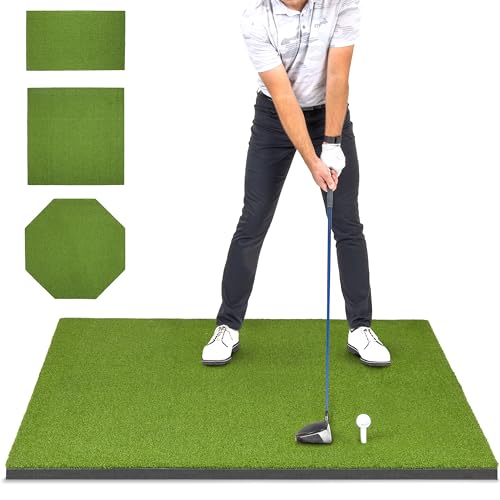 Hitting mat GoSports GoSports Elite 5'x4' Golf Hitting Mat
Full-stance turf pad on a firm rubber base with a foam underlay, a forgiving strike surface to set flush on a hard garage slab.
-
 Short-throw projector BenQ BenQ TH671ST 1080p Short Throw Projector
A 1080p, 3,000-lumen short-throw that fills a 100 inch screen from about 5 feet, so it ceiling-mounts in front of and clear of your swing.
-
 Foam floor tiles BalanceFrom BalanceFrom Puzzle Exercise Mat 3/4-inch, 96 sq ft
Twenty-four interlocking 3/4 inch EVA foam tiles that build a cushioned, quiet subfloor over cold garage concrete around the hitting mat.
-
 Cooling fan iLiving iLIVING 20 Inch Heavy Duty Floor Fan
A 5,750 CFM, 3-speed floor and wall-mount fan that keeps a closed garage bay comfortable through long hitting sessions in summer.
Prices update on Amazon and change often. As an Amazon Associate we earn from qualifying purchases at no extra cost to you.
Start with the low-ceiling problem
Most simulator builds that go wrong go wrong here. A full driver swing reaches surprisingly high at the top, and an attached garage ceiling is often just 8 to 8.5 feet. That is iron-and-wedge territory, not a place to swing a driver freely. Before you buy a single piece of gear, tape an alignment stick or a length of dowel to the head of your driver, stand where the hitting mat will go, and take several full, committed swings. Watch where the tip reaches at the top of your backswing and through impact.
As a planning rule, you want roughly 9 feet of clear height as a practical minimum, 10 feet to feel comfortable, and anything under about 8.5 feet means you are likely limited to irons. Height matters more than you think because you also lose a few inches to the impact screen frame, any ceiling-mounted projector, and lighting. If your garage has exposed trusses or a sloped ceiling, find the lowest point in your swing zone and measure there, not at the peak of the roof.
Use our golf sim room size calculator to plug in your real ceiling, width, and depth and see whether your space supports a full swing or favors an irons-only setup. It is the fastest way to turn tape-measure numbers into a clear go or no-go.
Depth and width in a two-car garage
Width is rarely the problem in a garage. A two-car bay gives you about 18 to 20 feet across, which is more than enough for a right-handed or left-handed setup, and even leaves room for a both-handed configuration if you have 15 feet or more of clear width. Depth is the real constraint. You have to fit the gap between the screen and the wall behind it, the screen standoff for shot safety, the hitting zone, and comfortable standing room behind the ball.
| Dimension | Workable minimum | Comfortable |
|---|---|---|
| Ceiling height | 9 ft | 10 ft |
| Width | 10 ft | 12 ft (15 ft for both-handed) |
| Depth | 12 ft | 15 ft |
If you use a radar or doppler launch monitor like the Garmin R10, remember it sits behind the ball and needs several feet of clear ball flight in front of you to read the shot, which eats into depth. A camera or photometric monitor needs less depth but wants good, even lighting. Plan your monitor type before you fix the screen position so the room depth supports it.
Insulation, heating, and cooling
A bare garage tracks the outdoor temperature, which makes winter and summer sessions miserable and is hard on electronics. If you want year-round use, insulate the walls and ceiling, and do not forget the garage door itself, which is usually the biggest uninsulated panel in the room. Insulated door kits or rigid foam panels cut the heat loss dramatically.
For heat, a small electric space heater works for occasional use, while a ductless mini-split is the premium option that handles both heating and cooling from one quiet unit. Cooling matters more than people expect: projectors run hot, and a stuffy garage in summer shortens their life and dims the image. A portable AC or that same mini-split keeps the room and the projector happy. Keep airflow away from the projector lens to avoid dust buildup.
Finishing the floor
Garage slabs are hard, cold, and loud. Build up the floor in layers: a quality hitting mat for the strike zone, then low-pile turf or interlocking foam tiles across the rest of the bay so it looks finished and deadens the sound of bouncing balls. A rubber or foam underlayment beneath the turf protects your joints and quiets the room further. The most important detail is that the hitting mat sits flush with the surrounding floor, so you are not standing on an awkward step at address.
If the slab is uneven or slopes toward a drain, shim or level the hitting area so your stance is true. A tilted floor quietly wrecks your swing feedback and your ball-striking.
Lighting
Garages usually have one or two weak overhead bulbs, which is not enough. You want bright, even, glare-free light that does not wash out a projector image or throw shadows across the hitting zone. Use dimmable LED panels or shop lights positioned to the sides and behind the hitting area rather than aimed at the screen. Avoid any light spilling directly onto the impact screen, since that lowers contrast and dulls the projected picture. If you run a camera-based launch monitor, consistent lighting also improves its shot reads.
Retractable versus permanent setups
The big lifestyle question is whether you still park a car in the bay. A permanent enclosure with a fixed frame and screen looks the best and is the fastest to use: walk in and hit. The trade-off is that it claims the space full time. A retractable setup, using a roller-style screen or a net and screen on a pulley system, lets you raise everything and reclaim the bay for vehicles when you are done. It costs a little more in hardware and adds a minute of setup before each session, but for a one-car family it is often the only realistic option.
Whichever you choose, budget for the enclosure, screen, mat, monitor, projector, and computer together rather than one piece at a time. Our golf sim cost calculator helps you build a realistic total so the project does not creep past what you planned.
Protecting the car and the space
Even a well-sized screen will not save a badly shanked ball, so treat ball containment seriously. Move the car out of the line of fire before every session, or keep it in a separate bay entirely. Add side netting to catch wayward shots, protect any windows or glass with netting or panels, and keep tools, shelving, and anything fragile out of the hitting line. A thick mat and surrounding turf stop bounced balls from chipping the concrete or ricocheting into the room.
Picking the gear
Once the room is sorted, the gear falls into place. For the launch monitor, start with our roundup of the best launch monitors, then match the projector to your throw distance using the best golf simulator projectors guide and a short-throw model if your projector has to clear the swing. The hitting surface is where your joints will thank you, so choose carefully from the best golf hitting mats. Measure twice, swing a full driver in the actual space, and build the room before you fall in love with the gear.
Golf Sim Build Planner
Room-fit worksheet, gear checklist, budget tracker, and wiring and lighting plan, in one printable planner that takes your build from idea to first swing.
Frequently Asked Questions
What ceiling height do I need for a garage golf simulator?
Aim for at least 9 feet of clear height for a full driver swing, with 10 feet being comfortable for taller players. Many attached garages sit around 8 to 8.5 feet, which usually limits you to irons and a shortened swing. Before buying anything, stand where you plan to hit and take a few full driver swings with an alignment stick taped to the clubhead so you can see exactly where the top of your arc reaches.
Can I fit a golf simulator in a standard two-car garage?
Often yes, but depth is usually the constraint, not width. A two-car garage gives you roughly 18 to 20 feet of width, which is plenty, but the 20 to 22 feet of depth has to hold the screen standoff, the hitting zone, and your standing room behind the ball. You generally want about 12 feet of depth as a workable minimum and 15 feet to feel relaxed. Measure before you commit.
Should I build a permanent or retractable garage simulator?
It depends on whether you still park a car in the bay. A permanent enclosure looks cleaner and is faster to use, but it claims the space full time. A retractable setup using a roller screen or a net on a pulley lets you reclaim the bay for vehicles, which is the right call for most one-car families. Retractable costs a bit more in hardware but saves you from converting the whole garage.
Do I need to insulate and heat my garage for a simulator?
If you want to use it year round in a cold or hot climate, yes. Bare garages swing with the outside temperature, which is rough on you, your electronics, and a projector. Insulating the walls, ceiling, and the garage door, then adding a small electric or mini-split heater, makes the space usable in winter. In summer a portable AC or mini-split keeps the projector from overheating and the room comfortable.
Will hitting balls damage my garage or my car?
A properly sized impact screen and enclosure will stop normal shots, but mishits and the occasional shanked ball are the real risk. Keep vehicles out of the line of fire, or move the car before sessions if you use a retractable setup. Add side netting to catch wayward shots, protect any windows, and put a thick mat or turf down so bounced balls do not chip concrete or ricochet into tools and shelving.
What flooring works best on a garage concrete slab?
Start with a quality hitting mat for the strike zone, then surround it with low-pile turf or interlocking foam tiles so the whole bay feels finished and quiet. Concrete is hard on your joints and loud when balls bounce, so a layer of underlayment or rubber matting under the turf helps with both. Make sure the hitting mat sits flush with the surrounding floor so you are not stepping up or down at address.
Building a golf sim?
Use our free calculators and guides to size the room, the gear, and the budget.
Build Planner: $39