Best Golf Launch Monitors (2026)
The best golf launch monitors for 2026, from the budget Garmin R10 and SkyTrak+ to premium Trackman and Foresight GCQuad, with photometric vs radar buying guidance.
The best golf launch monitor for most home simulator builders is the SkyTrak+, a compact unit that balances accuracy, modest space needs, and broad software support. If you are on a tight budget, the Garmin Approach R10 is the radar value pick at well under $500, while serious players who want tour-grade numbers should look at the Bushnell Launch Pro, Trackman, or Foresight GCQuad. Below are six monitors across every budget, plus a clear explanation of photometric versus radar so you buy the right sensor for your room.
Best Golf Launch Monitors for 2026

SkyTrak SkyTrak+ Launch Monitor
Photometric/radar hybrid that hits the sweet spot for home sims: strong accuracy, compact depth needs, and GSPro plus E6 Connect support.
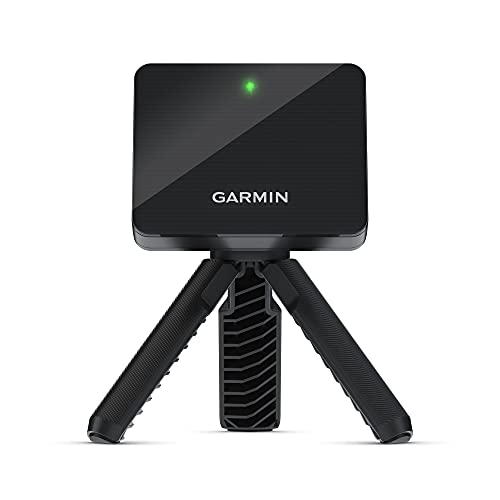
Garmin Approach R10 Portable Golf Launch Monitor
The budget radar darling: tracks club and ball data, pairs with the Garmin Golf app, and runs up to 10 hours per charge.

Bushnell Launch Pro Photometric Launch Monitor
Prosumer camera-based unit using Foresight ball-reading tech, with optional software unlocks to grow from data tool to full simulator.
FlightScope Mevo+ Portable Launch Monitor and Simulator
Portable doppler radar with built-in simulation, environment optimizer, and the range room of a radar in a take-anywhere body.
Trackman Trackman Golf Radar Launch Monitor
The tour-standard dual-radar unit pros and club fitters trust, with the deepest ball-flight modeling money can buy.

Foresight Sports GCQuad Quadrascopic Launch Monitor
Four high-speed cameras capture club and ball data at impact, the data-rich photometric standard for fitters and serious sim builders.
A launch monitor is the heart of any golf simulator. It reads your club and ball at impact and feeds numbers to the software that draws the shot on screen. Get the sensor right and everything downstream, the projector, screen, and PC, simply displays good data. Get it wrong for your space and even an expensive unit will frustrate you. The single most important decision is the sensing type, so let us settle that first.
Photometric vs radar: the choice that drives everything
Launch monitors read the ball in one of two ways, and the difference shapes how much room you need and where the unit sits.
Photometric (camera) monitors like the SkyTrak+, Bushnell Launch Pro, and Foresight GCQuad use high-speed cameras to photograph the ball and clubhead at the moment of impact. They sit beside or just in front of the hitting area, measure the ball directly off the face, and need very little ball-flight room. The trade-off is that they want consistent, good lighting and tidy ball placement to read cleanly. For tight indoor bays, photometric is usually the smarter sensor.
Radar (doppler) monitors like the Garmin R10, FlightScope Mevo+, and Trackman track the ball as it flies using a doppler signal. They sit several feet behind you and want a good stretch of flight space, ideally 8 feet or more, to gather enough data on each shot. Radar excels outdoors and on the range where the ball can fly freely, and a deep indoor bay works too. In a short room, a radar unit has less to read and accuracy suffers.
The practical rule: short or shallow room, choose photometric. Deep bay or outdoor use, radar is great. Confirm your dimensions with our golf sim room size calculator before you commit, and see how each model lines up in our launch monitor comparison chart.
Quick comparison
| Monitor | Type | Best for | Rough price |
|---|---|---|---|
| SkyTrak+ | Photometric + radar | Best overall home sim | ~$3,000 |
| Garmin Approach R10 | Radar | Best budget, range and home | ~$400 |
| Bushnell Launch Pro | Photometric | Best value prosumer | ~$2,000+ |
| FlightScope Mevo+ | Radar | Best portable, range friendly | ~$2,000 |
| Trackman | Dual radar | Best premium, tour standard | $18,000+ |
| Foresight GCQuad | Photometric (4 cameras) | Best for data, fitting | $12,000+ |
Prices move constantly and several of these units are not sold on Amazon, so treat the figures as a planning snapshot. Factor the monitor into your full budget with our golf sim cost calculator, since the sensor is usually the single largest line item in a build.
SkyTrak+ (Best Overall)
The SkyTrak+ is the unit we point most home builders toward. It combines camera reading with radar data to improve accuracy and capture more parameters than the original SkyTrak, yet it stays compact and forgiving on room depth. It plays well with GSPro and E6 Connect for full course rounds and ships with its own practice software. For a player building a dedicated bay who wants reliable numbers without stepping into five-figure territory, it is the natural center of gravity for the whole market.
Garmin Approach R10 (Best Budget)
The R10 made radar launch data affordable, and it remains the budget benchmark. It tracks clubhead speed, ball speed, launch angle, and more through the Garmin Golf app, records swing video, and runs up to 10 hours per charge, so it travels easily between the range and a home setup. It measures fewer parameters directly than premium units and estimates the rest, so spin and short-game numbers wander, but for practice, gapping, and casual sim rounds it delivers remarkable value for the price.
Bushnell Launch Pro (Best Value)
The Launch Pro brings Foresight ball-reading technology into a prosumer package. Out of the box it is a precise data monitor, and you can unlock simulation and additional metrics through software tiers as your needs grow, which lets you start lean and scale. Photometric sensing means it sits beside the ball and thrives in a shallow indoor bay. For a serious home golfer who wants accuracy approaching the pro units without the pro-unit invoice, the Launch Pro is the value standout.
FlightScope Mevo+ (Best Portable)
The Mevo+ is the portable radar of choice for players who split time between an indoor bay and the range. It packs doppler tracking, built-in simulation, and an environment optimizer into a unit you can carry in a bag, and it integrates with GSPro and E6 Connect. As a radar it wants real ball-flight room, so plan for a deeper bay or outdoor use. If flexibility matters as much as data, the Mevo+ covers more situations than any fixed photometric unit.
Trackman (Best Premium)
Trackman is the tour standard, the dual-radar system you see on practice tees at professional events and in high-end fitting studios. It models ball flight with a depth and consistency that nothing else quite matches, which is exactly why it costs as much as a car. For a home builder this is overkill, but for teaching pros, fitters, and players who demand the last word in accuracy, it is the no-compromise option. Most readers should admire it and buy a SkyTrak+ instead.
Foresight GCQuad (Best for Data)
The GCQuad uses four high-speed cameras to capture the clubhead and ball directly at impact, producing the richest, most reliable data set in the photometric world. It is the fitter's and instructor's favorite because every meaningful club and ball parameter is measured rather than estimated, and as a camera unit it fits a tight indoor space. The price keeps it out of most home builds, but if your priority is the deepest, most trustworthy numbers, nothing reads impact like the GCQuad.
How we chose
We did not test these monitors in person. Instead, we compared published manufacturer specifications, sensing type, measured versus estimated parameters, room and lighting requirements, battery and connectivity, and software compatibility, then weighed them against patterns in verified owner reviews and the consensus among golf simulator communities. We gave extra weight to how each unit performs in a realistic home bay rather than in an ideal lab, because room depth and lighting decide whether a sensor delivers on its spec sheet.
We deliberately spread the picks across budgets and both sensing types, because the right monitor depends on your space and goals, not on a single ranking. A $400 radar can be the correct buy for one reader and a $12,000 camera array for another. Pricing and software support shift often, so confirm current figures and compatibility before purchasing, and verify the unit fits your room first.
Buying tips
Start with your room, not the monitor. Measure your bay depth and ceiling height, then pick a sensing type that fits: photometric for shallow indoor spaces, radar for deep bays or outdoor use. Our room size calculator tells you in a minute whether a radar unit has the flight room it needs. Next, set a realistic total budget with the cost calculator, since the screen, projector, and PC still need funding after the sensor.
Then match the monitor to the software you want. Verify your chosen unit natively supports GSPro or E6 Connect rather than relying on a workaround, especially with budget radar like the R10. Finally, be honest about how much accuracy you actually need: most home golfers are thrilled with a mid-tier unit, and the money saved versus a tour-grade system buys a better screen, enclosure, and projector. If you are torn between the two value leaders, our SkyTrak vs Garmin R10 comparison breaks down the decision in detail.
Golf Sim Build Planner
Room-fit worksheet, gear checklist, budget tracker, and wiring and lighting plan, in one printable planner that takes your build from idea to first swing.
We also have full reviews of each: Foresight GC3 review and SkyTrak ST MAX review and Full Swing KIT review.
Frequently Asked Questions
What is the best golf launch monitor for a home simulator?
For most home simulator builds, the SkyTrak+ is the best overall choice. It blends camera and radar sensing for solid accuracy, needs less depth behind the ball than a pure radar, and works with GSPro and E6 Connect for full course play. If your budget is tight, the Garmin Approach R10 is the value radar pick. If you want pro-grade data and can spend more, look at the Bushnell Launch Pro or Foresight GCQuad.
What is the difference between photometric and radar launch monitors?
Photometric monitors use high-speed cameras to photograph the ball and club at impact, so they sit beside or in front of the hitting area and need good lighting but little ball-flight room. Radar monitors use doppler signals to track the ball through the air, so they sit behind you and want several feet of flight space to read each shot. Photometric units excel in tight indoor rooms, while radar units shine outdoors or in deeper bays.
How much room do I need behind a radar launch monitor?
A radar unit like the Garmin R10 or FlightScope Mevo+ sits roughly 6 to 8 feet behind the ball and wants 8 feet or more of ball flight in front of the screen to read each shot well. Cramped depth shortens the data window and can hurt accuracy. Photometric units like the SkyTrak+ or GCQuad need far less depth. Use our room size calculator to confirm your bay handles your chosen sensor before you buy.
Do I need a Trackman or GCQuad for a good home sim?
No. Trackman and the Foresight GCQuad are superb, but they cost many times more than a home builder needs. A SkyTrak+, Bushnell Launch Pro, or Garmin R10 gives you accurate, enjoyable indoor golf for a fraction of the price. The premium units make sense for club fitters, teaching pros, and players who demand tour-grade numbers. For practice and course play at home, a mid-tier monitor is plenty.
Which launch monitors work with GSPro and E6 Connect?
GSPro and E6 Connect both support a wide range of monitors, including the SkyTrak+, Bushnell Launch Pro, FlightScope Mevo+, Trackman, and Foresight GCQuad. The Garmin R10 connects to GSPro through a community bridge rather than native support, so check current compatibility before counting on it. Always verify the software you want lists your exact monitor, since support and connection methods change over time.
Are budget launch monitors accurate enough?
Budget radar units like the Garmin R10 are accurate enough for practice, club gapping, and casual sim rounds, but they directly measure fewer parameters and estimate the rest, so short-game and spin numbers wander more than on premium units. Lighting, room depth, and consistent ball placement all affect results. For most home golfers a budget monitor is genuinely useful, just keep expectations realistic and treat the data as a trend, not gospel.
Building a golf sim?
Use our free calculators and guides to size the room, the gear, and the budget.
Build Planner: $39