Golf Simulator Ceiling Height: How Much Do You Need?
Golf simulator ceiling height explained: 9 ft practical minimum for a full driver swing, 10 ft comfortable, under 8.5 ft irons-only, plus how to test your swing and low-ceiling fixes.
For a golf simulator, plan on 9 feet of ceiling height as the practical minimum for a full driver swing, 10 feet for comfortable clearance, and treat anything under 8.5 feet as irons-and-wedges territory. The exact number you need depends on your height and swing, so the single most important step is to test your own full swing for overhead clearance before you build. Here is what each threshold means and how to make a low room work.
Gear for a low ceiling
Monitors that sit behind the ball and a low-profile mat keep your tight overhead space clear for the swing.
-
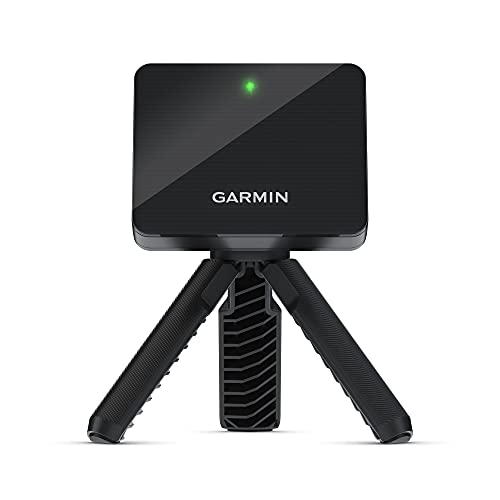 Behind-the-ball monitor Garmin Approach R10 Portable Golf Launch Monitor
Sits behind the ball rather than overhead, so it keeps your limited ceiling free for the swing.
-
 Pocket monitor PRGR HS 130-A Portable Golf Launch Monitor
Pocket radar that reads speed, smash factor, and carry with no overhead hardware, ideal for an irons-only low-ceiling bay.
-
 Pocket monitor Voice Caddie SC200Plus Portable Launch Monitor
Standalone unit that calls out your numbers out loud, another no-overhead option for a tight room with restricted height.
-
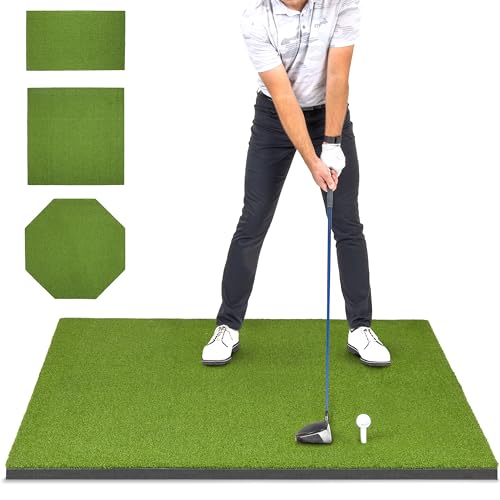 Low-profile mat GoSports Elite 5'x4' Golf Hitting Mat
Low-profile 15 mm turf on a firm base that keeps your hitting position low so you do not lose precious clearance overhead.
Prices update on Amazon and change often. As an Amazon Associate we earn from qualifying purchases at no extra cost to you.
The ceiling height thresholds
| Ceiling height | What it allows |
|---|---|
| 10 ft or more | Comfortable full swing for nearly any golfer, including tall players |
| 9 ft | Practical minimum for a full driver swing for average-height players |
| 8.5 to 9 ft | Borderline; many golfers can swing driver, but test carefully |
| Under 8.5 ft | Irons and wedges only for most players; no full driver swing |
See the full ceiling height chart for more detail by player height, and use our room size calculator to check height alongside width and depth.
Why ceiling height matters so much
The clubhead reaches its highest point at the top of the backswing, and for a fast driver swing that point is higher than most people guess. If the ceiling is too low, you either clip it, which is dangerous and expensive, or you instinctively shorten and alter your swing, which ruins the realism and the data the simulator is supposed to give you. Ceiling height is the dimension that most often forces a build to change plans, which is why it deserves more attention than the floor space.
Height needed scales with the player. A six-foot-four golfer with an upright, steep swing reaches considerably higher at the top than a five-foot-six golfer with a flatter, rounded move. That is why a flat 9-foot recommendation is a starting point, not a guarantee. The only reliable answer comes from testing the actual player in the actual room.
How to test your own swing
You do not need any gear to check clearance. Follow these steps in the room you plan to use:
- Take a driver into the room and set up as if to hit a ball.
- Make a slow, full backswing and freeze at the top, where the clubhead is highest.
- Look at the space between the clubhead and the ceiling. You want a clear safety margin, not a hair's breadth.
- Hold a high, full finish and check clearance again, since some golfers reach high on the follow-through too.
- Repeat at closer to full speed if you can do so safely, because the club reaches slightly higher and faster than in a slow rehearsal.
If the clubhead comes close to the ceiling in any of these, treat the room as irons-only or apply the workarounds below. Better to learn this with a rehearsal swing than with a real one at full speed.
Workarounds for low ceilings
A low ceiling does not end the project. Several adjustments keep a tight room usable:
Flatten your swing plane
A more rounded, baseball-style swing plane keeps the clubhead lower at the top than an upright, vertical move. Some golfers naturally swing flat and lose almost no height. If you can comfortably adopt a flatter plane, you may reclaim several inches of clearance. Just be honest that changing your swing to fit a room can affect your real-course game.
Go irons-only
Irons and wedges require less height than a driver because the swings are shorter and slightly more compact. A room under 8.5 feet that cannot fit a driver swing can still be an excellent irons-and-wedges practice bay. Many owners find that approach play, distance control, and short-game work deliver most of the practice value, and they simply skip driver or use a net elsewhere for tee shots.
Choose a side-mounted photometric monitor
Keep the overhead space clear by avoiding ceiling-mounted hardware. A side-mounted photometric launch monitor such as the SkyTrak or Bushnell Launch Pro sits beside the ball rather than overhead, and a radar unit like the Garmin R10 sits behind the ball. Both leave your limited ceiling free for the swing instead of the gear. Our best launch monitors guide notes which units mount where, and the budget launch monitors guide covers affordable side and behind-the-ball options.
Use the highest part of the ceiling
Basements and garages often have uneven ceilings, with ductwork, beams, or garage door tracks dropping the height in spots. Position your hitting area under the highest clear section, and measure to the lowest obstruction in your swing zone rather than the highest point of the room. A few inches gained from smart placement can be the difference between an irons-only bay and a full-swing one.
Bottom line
Aim for 10 feet if you can, accept 9 feet as a solid minimum for most golfers, and treat under 8.5 feet as an irons-and-wedges room. Whatever your number, test your own full swing before building, because your height and swing decide the real requirement. For the complete planning picture, pair this with our room size guide and the room size calculator.
Golf Sim Build Planner
Room-fit worksheet, gear checklist, budget tracker, and wiring and lighting plan, in one printable planner that takes your build from idea to first swing.
Frequently Asked Questions
How much ceiling height do I need for a golf simulator?
About 9 feet is the practical minimum for a full driver swing, and 10 feet is comfortable for nearly any golfer. Under 8.5 feet usually limits you to irons and wedges. The exact number depends on your height and swing, because taller players and steeper, more vertical swings reach higher at the top of the backswing. Always test your own full swing for overhead clearance before committing.
Can I build a golf simulator with an 8 foot ceiling?
You can build a practice bay with an 8 foot ceiling, but most golfers cannot make a full driver swing without risking the ceiling. At 8 feet you are realistically in irons-and-wedges territory, with a flatter, more rounded swing. Many owners with low ceilings still get great practice value hitting irons into a screen or net, just without driver. Test your own full swing first to be sure.
How do I test if my ceiling is tall enough?
Take a real club into the room and make a slow, full backswing. Watch the clubhead at the top, where most golfers reach their highest point, and check the clearance above it. Then hold a high finish and check again. Leave a safety margin, because your swing moves faster and reaches slightly higher at full speed than in a slow rehearsal. If the clubhead comes close, treat the room as irons-only.
What can I do about a low ceiling for a golf simulator?
Several workarounds help. Flatten your swing plane to a more rounded, baseball-style move, focus on irons and wedges instead of driver, and choose a side-mounted photometric launch monitor that does not sit overhead in the swing path. You can also position the hitting area under the highest part of an uneven ceiling. Each option trades some range for a usable bay, and many golfers find irons-only practice plenty valuable.
Does ceiling height affect which launch monitor I should buy?
Indirectly, yes. Overhead camera units mount on the ceiling and need clearance there, while side-mounted photometric monitors like the SkyTrak or Bushnell Launch Pro sit beside the ball and keep the overhead space clear. Radar units like the Garmin R10 sit behind the ball and do not compete for ceiling space. In a low room, a side or behind-the-ball monitor avoids putting hardware in your already-tight overhead area.
Is 9 foot ceiling enough for a golf simulator?
For most golfers, yes. Nine feet is the widely cited practical minimum that clears a full driver swing for average-height players. Taller golfers or those with very upright, steep swings should still test their own swing, because they may want closer to 10 feet. If your full backswing clears 9 feet with a safety margin in your own test, you can build a full simulator with confidence.
Building a golf sim?
Use our free calculators and guides to size the room, the gear, and the budget.
Build Planner: $39