Best Golf Simulator Enclosures (2026)
The best golf simulator enclosures for 2026: all-in-one bays and DIY kits from GoSports, Carl's Place, and more, with sizing, impact screen, and frame guidance.
The best golf simulator enclosure for most home bays is the GoSports 10 x 8 ft Enclosure Net, a steel-framed all-in-one with blackout panels and a commercial-grade HD impact screen that drops into a 10 ft wide room. If you want the screen, projector mount, and side nets in one box for less, the ANYTHING SPORTS Complete Package is the value pick, and tight or cheaper rooms do well with the KIKILIVE kit. For an exact-fit build, a Carl's Place DIY kit is the enthusiast choice. Here are six real enclosures across budgets, plus how to size one to your room.
Best Golf Simulator Enclosures for 2026

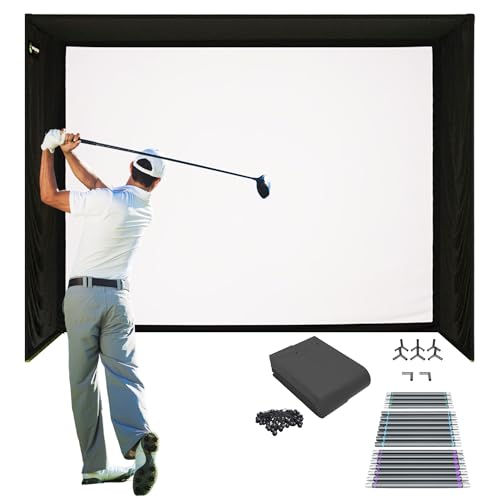
GoSports GoSports 10 x 8 ft Golf Simulator Enclosure Net
All-in-one bay with steel frame, blackout panels, and a commercial-grade HD impact screen sized for a 4:3 projector image in a 10 ft wide room.

ANYTHING SPORTS Complete Golf Simulator Enclosure Package
Includes the impact screen, blackout cage, frame poles, side shank nets, and a projector mount, so you do not buy the screen separately. Multiple cage sizes.

KIKILIVE Golf Simulator Enclosure Net 10 x 8 ft, HD Impact Screen
Budget all-in-one with foam-filled frame, blackout curtains, removable side nets, a base ball collector, and a sound-absorbing 4:3 screen for tight rooms.
Carl's Place Carl's Place DIY Golf Simulator Enclosure Kit
Build-your-own frame fittings plus a premium tensioned impact screen, sized to your exact room. The enthusiast pick when off-the-shelf bays do not fit your space.
Shop Indoor Golf SIG10 / SIG12 Golf Simulator Enclosure
A finished retail bay (Sized-In-Golf) with a steel-tube frame, premium impact screen, and side barrier netting. Popular pairing for SkyTrak and Bushnell builds.
Rukket / allsportsystems Both-Handed Wide Enclosure (15 ft+ Frame)
Aluminum-extrusion and wide-frame bays built for 15 ft+ width so righties and lefties share the same screen without repositioning the hitting mat.
An enclosure is the frame, impact screen, and netting that turn a room into a hitting bay. It is the structural backbone of the whole setup: it holds the screen taut so the projected image looks crisp, contains full-speed shots and the occasional shank, and blocks ambient light so the picture stays bright. Get the enclosure right and everything else, launch monitor, mat, and projector, drops into place around it. Get it wrong and you fight a sagging screen, a too-small image, or a room you cannot actually swing in.
Quick comparison
| Enclosure | Type | Screen included | Best for | Price |
|---|---|---|---|---|
| GoSports 10 x 8 ft | All-in-one bay | Yes | Best overall | $999.99 |
| ANYTHING SPORTS Package | All-in-one bay | Yes, plus projector mount | Best value | $699.99 |
| KIKILIVE 10 x 8 ft | All-in-one bay | Yes | Best budget | $529.99 |
| Carl's Place DIY Kit | DIY frame + screen | Yes, sized to room | Exact-fit builds | Varies |
| SIG10 / SIG12 | Retail bay | Yes | Premium finished bay | Varies |
| Both-Handed Wide Frame | All-in-one / DIY | Yes | Righty + lefty (15 ft+) | Varies |
Amazon pricing moves around, so treat these as a snapshot. Coverage and fit are tied to your room, so confirm your dimensions first with our golf sim room size calculator, then add up the full build with the golf sim cost calculator before you commit.
GoSports 10 x 8 ft Enclosure Net (Best Overall)
The GoSports bay is the safe default for a standard one-person room. It pairs a reinforced steel frame with a true blackout enclosure, the panels are dyed to block outside light so the projector looks brighter, and a multi-layer commercial-grade impact screen rated for high-speed strikes. The 10 x 8 ft footprint suits a 4:3 projector image and fits the common 10 ft wide garage or basement bay. Foam padding helps cut rebound, and the screen doubles as both your projection surface and your stopping wall. For most buyers who want one box that works with any launch monitor, this is the pick.
ANYTHING SPORTS Complete Package (Best Value)
This kit earns its spot by including the parts people forget. You get the 4K-ready impact screen, the blackout cage, all the frame poles, side shank nets, and a projector mount built into the frame, which alone saves a separate purchase and a fiddly ceiling-mount job. It comes in multiple cage sizes so you can match your room, and it assembles tool-free in about an hour. Note that the turf mat and projector shown in listings are not included. If you want the most complete bay for the money and one less accessory to source, start here.
KIKILIVE 10 x 8 ft Enclosure (Best Budget)
The KIKILIVE bay shows how far budget enclosures have come. It uses an EPE foam-filled frame for stability, heavy blackout curtains, removable 8-foot side netting, and a base ball-collector that funnels shots back to you. A sound-absorbing fabric layer keeps swing noise down, which matters in a shared house. The 4:3 screen and tight frame suit a smaller room, and at this price it is the cheapest way into a real screened bay rather than a net. You give up some of the screen longevity and finish of pricier kits, but for a first build it is hard to beat.
Carl's Place DIY Kit (Best DIY)
When no off-the-shelf bay fits your room, a DIY kit is the answer. Carl's Place sells frame fittings plus a premium tensioned impact screen cut to your exact width and height, so you build a bay that uses every inch of an odd basement or a low garage. You supply the conduit or extrusion and do the assembly, which takes longer than dropping a boxed bay together, but the payoff is a tightly tensioned, wrinkle-free screen and a frame that can be ceiling-anchored for a clean, permanent look. It is the enthusiast route. If you want to plan the build, our DIY enclosure guide walks through frame materials and screen tensioning.
SIG10 / SIG12 (Best Premium)
Finished retail bays like the Shop Indoor Golf SIG line sit a tier above the boxed Amazon kits. You get a heavier steel-tube frame, a premium impact screen, and side barrier netting in sizes such as the 10-foot SIG10 and wider SIG12. These are the bays specialty retailers pair with SkyTrak and Bushnell launch monitors, and the build quality and screen flatness show. They cost more and often ship from the retailer rather than Amazon, but if this is a forever room and you want a professional look, the premium frame is worth it.
Both-Handed Wide Frame (Best for Both-Handed)
If a right-handed and a left-handed golfer will share the bay, width is everything. Wide aluminum-extrusion and steel frames from makers like Rukket and allsportsystems stretch to 15 feet or more so both players hit toward the center of the screen without dragging the mat side to side. PlayBetter and other specialty sellers carry similar wide bays. The extra width also gives any single golfer more margin on a pull or push. Budget for a wider impact screen and confirm your room can actually take 15 ft of usable width, not just wall-to-wall, before you order.
How we chose
We did not build and swing in each of these enclosures. Instead, we compared published manufacturer specifications, frame material and footprint, whether an impact screen is included and how it is rated, blackout performance, side-netting coverage, and stated room requirements, then weighed them against patterns in verified owner reviews. We gave extra weight to whether the screen comes in the box, since buying a separate rated screen is the most common surprise cost, and to honest sizing, because an enclosure that does not fit your room is the most expensive mistake in a home build.
We separated all-in-one bays from DIY kits on purpose. Boxed bays win on speed and price certainty; DIY kits win on exact fit and screen quality but ask for more time and parts. We also called out both-handed width as its own category, because pool, theater, and golf rooms all share the same trap: people size for a wall, not for a swing. Dimensions and ratings here come from manufacturer claims, so treat them as estimates and measure your own room and full swing before buying.
Buying tips
Start with your room, not the product. Measure usable width, depth, and the lowest ceiling point, then run our room size calculator to confirm a bay fits and that you can take a full driver swing without clipping anything. Most one-person setups work at roughly 10 ft wide by 12 ft deep with 9 ft of ceiling; aim for 12 by 15 with 10 ft of height if you can, and 15 ft of width if both-handed. Next, check whether the impact screen is included and rated for full swings, a net-only cage is not the same thing, and if you want a screen upgrade later, compare our best golf impact screens.
Match the frame to how permanent the room is. A boxed steel bay is fine for renters and shared garages and tears down again; a Carl's Place DIY or ceiling-anchored frame is the choice for a dedicated forever room. Add foam edge padding to cut rebound, keep at least a few feet of standoff between screen and wall, and remember the enclosure is only the shell. You still need a launch monitor, mat, projector, and PC, so add the whole stack with the cost calculator before you decide what to spend on the bay itself.
Golf Sim Build Planner
Room-fit worksheet, gear checklist, budget tracker, and wiring and lighting plan, in one printable planner that takes your build from idea to first swing.
We also have a full SIG10 enclosure review.
Frequently Asked Questions
What size room do I need for a golf simulator enclosure?
A workable minimum is about 10 feet wide, 12 feet deep, and 9 feet of ceiling, which fits most 10x8 ft enclosures and a single-handed golfer. Comfortable is roughly 12 feet wide, 15 feet deep, and 10 feet high. If both a righty and a lefty will hit from the same bay, plan on 15 feet of width or more. Always test your own full driver swing before committing, since arm length and swing plane vary.
Does a golf simulator enclosure include the impact screen?
It depends on the product. All-in-one bays like the GoSports and KIKILIVE kits include the impact screen, frame, and blackout panels in one box. DIY kits from Carl's Place let you buy frame fittings and a tensioned screen sized to your room. A few cheaper cages are net-only, so read the listing carefully. If you want to upgrade the screen later, see our best golf impact screens review for standalone options.
What ceiling height do I need for a full swing?
About 9 feet is the practical minimum for a full driver swing, 10 feet is comfortable, and under 8.5 feet usually limits you to irons and a shorter swing. The screen and frame also eat a few inches at the top, so measure to the lowest point such as a beam, light, or garage door track. The safest move is to take a full driver swing with a club in your actual room before you buy anything.
Will an enclosure stop a hard mishit or shank?
A true enclosure with side barrier netting and a tensioned impact screen is designed to contain full-speed shots, including the occasional shank. The impact screen absorbs and drops the ball, while side nets catch shots that miss the screen. Net-only cages without a rated impact screen are riskier for hard drives. Add foam edge padding around the frame to cut rebound, and never set up so close to a wall that a ricochet can reach it.
Can I move an all-in-one enclosure or is it permanent?
Most all-in-one bays use tool-free steel or aluminum frames that assemble in under an hour and can be taken down again, so they suit renters and shared garages. They are heavier and less portable than a pop-up hitting net, but they are not permanently fixed like a built-in DIY ceiling-mounted frame. If you need a true tear-down setup, choose a freestanding kit rather than a Carl's Place ceiling-anchored build.
What else do I need besides the enclosure?
An enclosure gives you the frame, screen, and netting. You still need a launch monitor, a hitting mat, a projector or large TV, and a PC or tablet running your simulator software. Budget for those before you set a total. Our golf sim cost calculator helps you add it all up, and the room size calculator confirms the bay actually fits your space before anything ships.
Building a golf sim?
Use our free calculators and guides to size the room, the gear, and the budget.
Build Planner: $39