Best Portable Golf Simulators (2026)
The best portable golf simulators for 2026: pocket launch monitors like the Garmin R10, PRGR, and Rapsodo plus fold-down nets you can take to the range or store away.
The best portable golf simulator is the Garmin Approach R10: a pocket radar that runs all day, works at the range or in a net at home, and costs a fraction of a fixed setup. For the smallest possible kit, the PRGR HS 130-A slips into a bag with no app, and the Voice Caddie SC200Plus wins on battery life. Want a true travel simulator with swing video? The Rapsodo MLM2PRO delivers. Pair any of them with a fold-down Spornia SPG-7 or SPG-5 net and you have a complete take-anywhere bay. Here are six real picks plus how to assemble a portable kit.
Best Portable Golf Simulators for 2026
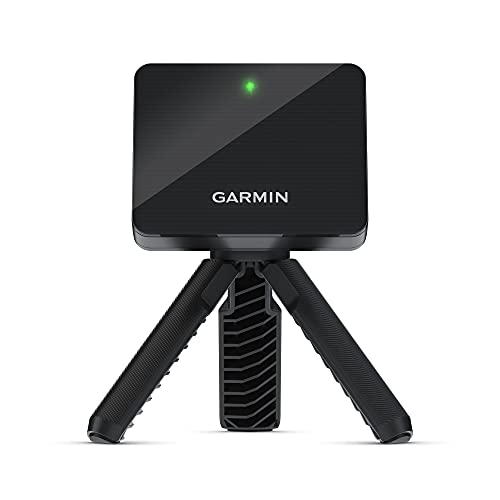
Garmin Approach R10 Portable Launch Monitor
Pocket-sized radar with up to 10 hours of battery that works at the range or in a net at home; the most versatile take-anywhere monitor for the money.

PRGR HS 130-A Portable Launch Monitor
About the size of a paperback, runs on AAA batteries with no app, and reads club speed, ball speed, and carry; the easiest unit to toss in a bag.

Voice Caddie SC200Plus Portable Launch Monitor
Compact monitor with a 12-hour battery and audible readouts, so you get distance and speed at the range without ever looking at a phone.

Rapsodo MLM2PRO Launch Monitor
Travel-friendly camera and radar unit with automatic shot video and full practice software; packs down small but plays like a home simulator.
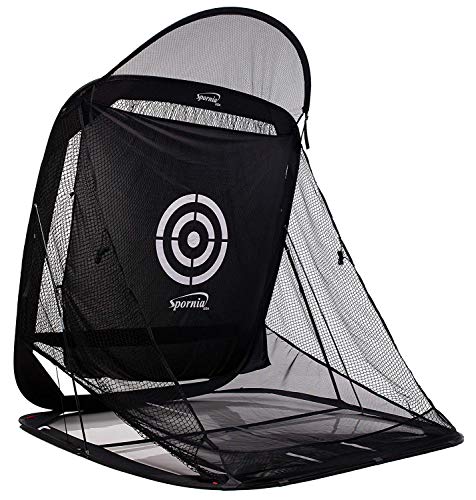
Spornia SPG-7 Golf Practice Net
Pop-up net with an automatic ball return, side barriers, and a roof that folds into a carry bag; pairs with any portable monitor for a take-anywhere bay.

Spornia SPG-5 Compact Golf Practice Net
A 5-by-5-foot net with ball return that sets up fast and stores small; the lightest containment option for travel and tight spaces.
Portable means two things: a launch monitor small and rugged enough to carry, and a way to contain the ball that folds down and travels. Get both and you can practice in the backyard, at the range, in a garage, or at a friend's place, then pack it all into a car trunk. The monitors below range from a 200-dollar pocket doppler to a 600-dollar camera-radar simulator, and the nets fold into carry bags. Match the monitor to how much data you want, then add containment only if you practice somewhere the ball cannot fly free.
Quick comparison
| Item | Type | Best for | Price |
|---|---|---|---|
| Garmin Approach R10 | Radar monitor | Best all-around portable | $399.98 |
| PRGR HS 130-A | Doppler monitor | Most pocketable | $199.99 |
| Voice Caddie SC200Plus | Doppler monitor | Longest battery | $234.99 |
| Rapsodo MLM2PRO | Camera + radar | Travel simulator with video | $599.98 |
| Spornia SPG-7 | Pop-up net | Best portable net | $349.99 |
| Spornia SPG-5 | Compact net | Smallest containment | $199.99 |
Prices on Amazon move around, so treat these as a snapshot. For more containment options, including larger fixed nets, see our best golf simulator nets roundup.
The monitors: pick your data level
The Garmin Approach R10 is the portable monitor to beat. It is a radar, so it reads ball flight at the range and works indoors into a net, and its app shows club speed, ball speed, launch angle, and carry plus simulated courses. For the absolute smallest kit, the PRGR HS 130-A is about the size of a paperback, needs no app, and runs on AAA batteries. The Voice Caddie SC200Plus trades app features for a 12-hour battery and spoken readouts. Step up to the Rapsodo MLM2PRO and you get camera-and-radar data, automatic shot video, and full software, a genuine simulator that still packs down small.
The nets: containment that folds away
If you practice anywhere the ball must be caught, a fold-down net completes the kit. The Spornia SPG-7 is a pop-up with an automatic ball return, side barriers, and a roof, and it folds into a carry bag. The Spornia SPG-5 is the compact 5-by-5-foot option that sets up in minutes and stores small, ideal for travel and tight rooms. Neither replaces a full impact screen and enclosure, but for portable practice they are the fastest path from car trunk to first swing.
Building a portable kit
A complete portable setup is just three parts: a monitor, a hitting surface, and containment. Drop the R10 or MLM2PRO behind a portable mat, hit into a Spornia net, and run the app on your phone or tablet. At the range, skip the net entirely. The whole thing fits in a trunk and stores in a closet, which is the real advantage of going portable over a fixed bay. If you later want projected graphics, you can keep the same monitor and add an impact screen and enclosure.
How we chose
We did not test this gear in person. We compared published manufacturer specifications, including size and weight, battery life, monitor technology, indoor and outdoor use, and how compactly the nets fold, then weighed those against patterns in verified owner reviews. For a portable roundup, our key filters were genuine pack-down size and whether each unit works both at the range and indoors, because a portable simulator that only functions in one setting defeats the purpose.
We paired monitors with nets rather than ranking them against each other, since a portable kit usually needs both. Specs like battery life and accuracy come from manufacturers and owner reports, so treat them as estimates. The most portable monitor is not always the most accurate, so choose based on where you will actually practice and how much data you want to see.
Buying tips
Start with where you will use it. If you mostly hit at a range, a bare monitor like the R10 or PRGR is all you need. If you practice at home or in a backyard, add a fold-down net sized to your space. Decide your data level next: pocket doppler units are lightest and cheapest, while camera-radar units add video and course play at more weight and cost. Confirm each monitor's indoor space and lighting notes so it performs where you plan to swing.
If there is any chance you will build a permanent bay later, plan ahead now. Check your room dimensions with our room size calculator, and buy a monitor that connects to simulator software so you can add an impact screen and projector down the road. That way your portable purchase becomes the heart of a full home simulator instead of something you replace.
Golf Sim Build Planner
Room-fit worksheet, gear checklist, budget tracker, and wiring and lighting plan, in one printable planner that takes your build from idea to first swing.
We also have full reviews of each: FlightScope Mevo Gen2 review and Full Swing KIT review.
Frequently Asked Questions
What is the best portable golf simulator?
The Garmin Approach R10 is the best all-around portable simulator monitor. It is pocket-sized, runs up to 10 hours on a charge, and works at the driving range or indoors into a net, so one device covers practice anywhere. Pair it with a fold-down net like the Spornia SPG-7 and you have a complete take-anywhere bay. If you want swing video and richer software, the Rapsodo MLM2PRO is the step-up portable pick.
Can a portable launch monitor be used indoors and outdoors?
Yes, that is the main appeal of portable units. Radar monitors like the Garmin R10 and PRGR HS 130-A work outdoors at a range where the ball flies freely, and indoors when you hit into a net or impact screen. Indoors you usually want a few feet of ball travel for radar to read well. Photometric and doppler units also work both ways, just confirm each model's lighting and space notes before buying.
Do I need a net for a portable golf simulator?
Only if you practice indoors or in a backyard where balls must be contained. At a driving range you do not, since the ball flies into open space. For home use, a fold-down net like the Spornia SPG-5 or SPG-7 is the simplest containment, packs into a carry bag, and sets up in minutes. If you want projected graphics rather than just numbers, you will step up from a net to an impact screen and enclosure.
Are portable golf simulators accurate?
They are accurate enough for practice and improvement, though not always to tour-grade precision. Portable radars like the R10 give reliable club speed, ball speed, and carry, while pocket doppler units like the PRGR focus on speed and distance. The trade-off for portability is fewer data points and slightly more variance than a fixed photometric monitor. For most golfers practicing at home or the range, that accuracy is more than enough to train effectively.
How small can a portable golf simulator pack down?
The monitors themselves are tiny: the PRGR HS 130-A is about the size of a paperback, and the Garmin R10 fits in a jacket pocket. The bulkier item is containment. A compact net like the Spornia SPG-5 folds into a round carry bag a few feet across, while the larger SPG-7 is still bag-portable. Altogether, a portable setup fits in a car trunk and stores in a closet between sessions.
Can I turn a portable monitor into a full home simulator later?
Yes. Many golfers start portable, then add an impact screen, a short-throw projector, and an enclosure to build a permanent bay around the same monitor. Radar units like the R10 and photometric units like the MLM2PRO both connect to simulator software for course play. If you think you will expand, check your room dimensions early so the monitor you buy now fits the bigger setup you build later.
Building a golf sim?
Use our free calculators and guides to size the room, the gear, and the budget.
Build Planner: $39