Golf Simulator Room Too Small? Make a Tight Space Work
Golf simulator room too small? Practical fixes for low ceilings, narrow width, and shallow depth, plus safety tips and how to pick a forgiving launch monitor.
A small room does not rule out a golf simulator, it just changes how you build it. The three constraints that matter are ceiling height, width, and depth, and each has practical workarounds. Low ceilings push you toward irons, a flatter swing, and a side-mounted launch monitor. Narrow rooms favor single-handed play and padded walls. Shallow rooms favor photometric camera units over radar. Above all, test your own full swing in the actual space before you commit, because your body, not a chart, decides what fits.
Small-space gear
A forgiving monitor, a net instead of a full enclosure, and a low-profile mat let a tight room host a real simulator.
-
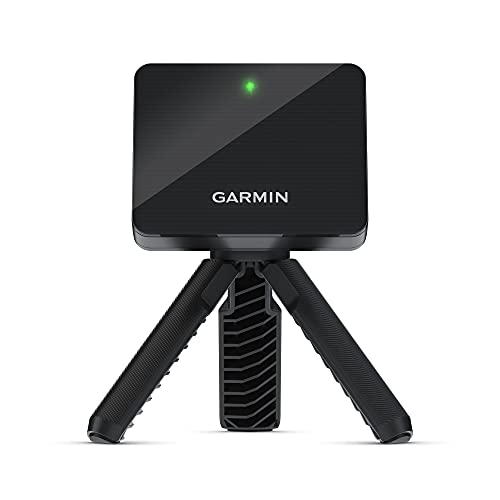 Forgiving monitor Garmin Approach R10 Portable Golf Launch Monitor
A compact, forgiving radar unit that mounts off to the side or floor, an affordable choice for a tight room as long as you have the depth behind the ball.
-
 Hitting net GoSports 10'x7' Golf Practice Net
A full-size steel-frame net with a multi-layer backstop that catches a driver in a small bay, a space-saving alternative to a full enclosure.
-
 Low-profile mat Rukket Sports Tri-Turf Hitting Mat Attack
A low-profile three-surface mat with fairway, rough, and tee sections, easy to tuck into a tight space and reposition for the room you have.
Prices update on Amazon and change often. As an Amazon Associate we earn from qualifying purchases at no extra cost to you.
Know your real numbers first
General guidelines give you a target: about 10 feet wide, 12 feet deep, and 9 feet of ceiling is a workable minimum for a full driver swing, while 12 wide, 15 deep, and 10 high is comfortable. Both-handed play wants 15 feet or more of width. But these are starting points. The single most important measurement is your own full swing, raise your driver to the top of your backswing and see whether it clears the ceiling and walls. Use our room size calculator to check your dimensions against these targets before you spend a dollar.
| Dimension | Workable minimum | Comfortable | If you are under |
|---|---|---|---|
| Ceiling height | ~9 ft (full swing) | 10 ft | Under 8.5 ft is irons-only territory |
| Width | ~10 ft (one-handed) | 12 ft | 15 ft+ needed for both-handed play |
| Depth | ~12 ft | 15 ft | Favor photometric over radar units |
Low ceiling: go irons-first
Ceiling height is the constraint that stops most full swings. Under about 8.5 feet, a driver swing clips the ceiling for many golfers, so plan an irons-and-wedges setup instead. You still get a tremendous practice and play experience, since most of the scoring game lives inside the irons anyway. A slightly flatter or shorter backswing buys clearance, and shorter players or those with rounded swings sometimes fit longer clubs. Mount the screen and any overhead lighting clear of your swing arc, and choose a launch monitor that does not need to hang from the ceiling. For the full breakdown of what fits at each height, see our ceiling height guide, and always test your fullest swing before hitting at speed.
Narrow width: commit to one side
Width determines how freely your club and trail arm clear the side walls and whether you can play both right and left-handed. Single-handed setups need the least width, so in a tight room commit to one hitting side rather than trying to support both. Stand in the space and take slow practice swings to confirm clearance on your trail side, where the club travels farthest from your body at the top. Pad nearby walls and any hard corners so a stray club or mishit does no damage, and position your hitting mat to maximize the distance from the wall on your swing side.
Shallow depth: choose the right monitor type
Depth is where launch monitor type matters most. Radar units, such as the Garmin R10 and FlightScope Mevo+, sit behind the ball and need room to track the ball as it flies, so they struggle in shallow rooms. Photometric camera units, such as SkyTrak and Bushnell Launch Pro, read the ball at impact and need less depth, which makes them the smarter pick when you cannot stand far back. You still need enough room between the ball and the screen for the ball to register and for safety, so confirm the minimum distances for any unit you consider. If radar is a must, verify the manufacturer's required space behind and in front of the ball before you buy.
Safety in a tight space
A small room raises the stakes on safety, so handle it deliberately. Leave clearance around your full swing arc, then pad nearby walls and hard corners. Make sure your impact screen and net can absorb a full-speed mishit with room to flex behind them, since a tight room often means less buffer space. Keep the floor clear, secure every cable, and never swing a club at speed that you have not first tested slowly in the exact spot you will hit from. A forgiving setup you can use safely is always better than a larger one crammed into a space that cannot hold it.
Pick a forgiving launch monitor
In a tight room, the right launch monitor does a lot of the heavy lifting. Look for a unit that fits your depth, photometric for shallow rooms, and one that can mount to the side or floor rather than overhead if your ceiling is low. Forgiveness also means a unit that reads well without a long run-up of ball flight and tolerates the lighting your space can provide. Our roundup of the best launch monitors breaks down which radar and camera units perform best in small rooms, so you can match the device to your constraints instead of fighting them.
The bottom line
Most small rooms can host a genuinely fun simulator with the right choices: irons-first for low ceilings, one hitting side for narrow rooms, a photometric unit for shallow depth, and safety built in from the start. Measure your space with the room size calculator, test your own full swing, and pick gear that suits the room you actually have. Done that way, a tight space becomes a daily practice habit instead of a project that never fits.
Golf Sim Build Planner
Room-fit worksheet, gear checklist, budget tracker, and wiring and lighting plan, in one printable planner that takes your build from idea to first swing.
Frequently Asked Questions
What is the minimum room size for a golf simulator?
A workable minimum is roughly 10 feet wide, 12 feet deep, and about 9 feet of ceiling for a full driver swing. Comfortable is closer to 12 feet wide, 15 feet deep, and 10 feet high. Those are starting points, not guarantees, because swing length and height vary by person. Always test your own full swing in the actual space before committing, since the numbers that matter most are the ones your body produces.
Can I use a golf simulator with an 8-foot ceiling?
You can hit in an 8-foot room, but it becomes irons-only territory for many golfers because a full driver swing clips the ceiling. Shorter players or those with flatter, more rounded swings sometimes manage longer clubs, but most people should plan around irons and wedges at that height. Test your driver and longest club carefully before assuming it fits, and consider a flatter swing or shorter backswing to stay safe.
How do I deal with a low ceiling specifically?
For a low ceiling, lean into irons and wedges, adopt a slightly flatter or shorter swing, and choose a launch monitor that can mount to the side or floor rather than overhead. Radar units placed behind the ball and some side-mounted photometric units avoid the ceiling entirely. Keep the screen and any overhead lighting clear of your swing arc, and always test your fullest swing before drilling or hitting at speed.
What if my room is narrow?
A narrow room limits how far you can stand from the side walls, which matters most for safety and for switching between right and left-handed play. Single-handed setups need less width, while both-handed play generally wants 15 feet or more. Stand in the space and take practice swings to confirm your club and trail arm clear the walls. If width is tight, commit to one hitting side and pad nearby walls for safety.
Is a shallow room a dealbreaker for radar launch monitors?
Shallow depth is the hardest constraint for radar units, because they sit behind the ball and need room to track ball flight as it leaves. In a shallow room a photometric camera unit, which reads the ball at impact and needs less depth, is often the better fit. If you are set on radar in a tight room, confirm the manufacturer's minimum distances, since too little space behind and in front of the ball degrades the data.
How do I make a tight space safe?
Safety comes first in a small room. Leave clearance around your full swing arc, pad nearby walls and any hard corners, and make sure the impact screen and net can absorb a mishit at full speed with room to flex behind them. Keep the floor clear, secure cables, and never swing a club you have not first tested slowly in the space. A forgiving setup you can use safely beats a bigger setup you cannot fit.
Building a golf sim?
Use our free calculators and guides to size the room, the gear, and the budget.
Build Planner: $39